
Which is the better investment: Copper (EV) vs. Uranium (Datacenter)
Time to shift expectations?

In the evolving landscape of natural resources, few elements are as pivotal as copper and uranium. Fast forward to today—are those bullish predictions still valid? Or is it time to reevaluate our bets? In this blog post, we delve into the current and future state of copper and uranium markets, and what it means for investors navigating these volatile waters.
The Bullish Narrative on Copper
Historical Price Movements and Current Trends
Copper has been on a remarkable journey already since 2016. Back then, the price was at a modest $2.10 per pound. Fast forward to today, and it has skyrocketed by nearly 150%. This impressive rise reflects a shift in market dynamics. Why has copper become so essential?
One reason is its crucial role in various industries, especially in the renewable energy sector. As countries around the world push for cleaner energy solutions, the demand for copper is set to surge. The S&P Global report anticipates that global copper demand will nearly double from 25 million tonnes in 2023 to almost 50 million tonnes by 2035.
Projected Copper Demand Growth
Renewable energy technologies are at the forefront of this expected growth. Copper is a key component in solar panels, wind turbines, and electric vehicles. As these technologies expand, so too does the need for copper. Industry analysts are excited, calling copper "the backbone of the renewable energy transition." But there’s a catch.
Potential Bearish Implications Tied to Renewable Inefficiencies
Despite the bullish outlook, there are concerns. Some experts warn about the efficiency of renewable energy sources - poor "energy returned on energy invested" or ERoEI. Could these inefficiencies undermine the demand for copper? The answer isn't straightforward.
Recent reports suggest that renewables may not achieve their expected adoption rates.
This could lead to a shift in sentiment, potentially making copper prices more volatile.
As the industry analyst pointedly asked,
"Copper is the backbone of the renewable energy transition, but can it sustain its upward momentum?"
This question encapsulates the uncertainty surrounding copper's future amidst evolving market conditions.
In conclusion, the journey of copper from $2.10 to its current price reflects not just historical trends, but also the complexities of future demand. As the renewable energy sector grows, so does the narrative surrounding copper. However, the potential for inefficiencies poses challenges that investors and industry players must navigate carefully.
Uranium: The Rise of Nuclear Power
Historical Context of Uranium Prices
Uranium has seen a dramatic shift in its market sentiment over the past few years. Prices once plummeted to a low of $17 per pound. This was a time when nuclear energy faced significant challenges, primarily due to public fear and misconceptions about safety. However, since then, uranium prices have surged by over 300%, highlighting a newfound optimism surrounding nuclear power.
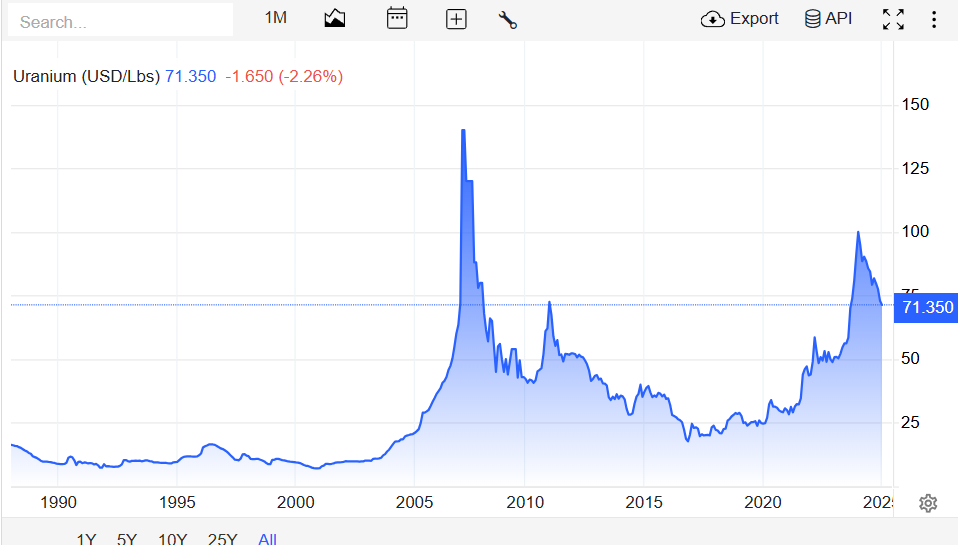
https://tradingeconomics.com/commodity/uranium
On top of that recent accumulation of phyiscal uranium through the "Sprott Phyiscal Uranium Trust / TSX : U.U.) from 2021 onwards played a pivotal role on the price development on the spot market (https://sprott.com/investment-strategies/exchange-listed-products/physical-commodity-funds/uranium/)
Current Bullish Sentiment
Today, the sentiment surrounding uranium is bullish. Several factors contribute to this optimism:
Environmental Concerns: As climate change becomes an urgent issue, nuclear power is gaining attention as a zero-emission energy source.
Market Demand: The growing demand for clean energy solutions is prompting a reevaluation of nuclear power's role. Especially intentions of tech companies like Meta or Microsoft to supply their AI-data centers with nuclear power through SMRs (Small Modular Reactors) https://www.forbes.com/sites/bobeccles/2024/08/31/microsoft-can-take-the-lead-in-small-modular-reactors-for-powering-ai/
Strong Company Performance: Companies like Cameco have shown impressive results, benefiting from the increased recognition of uranium's potential.
According to an expert
"Nuclear power is emerging as a critical player in reducing climate impact, making uranium a vital resource." – Energy Economist
Influence of Documentaries
The impact of media on public perception cannot be underestimated. Documentaries play a crucial role in how society views nuclear energy. A notable example is "Nuclear Now" by Oliver Stone. This film aims to challenge preconceived notions and presents nuclear energy in a positive light. It has sparked discussions and increased interest in uranium as a sustainable energy source.
Renewed Importance in Clean Energy Policy
The resurgence of uranium in the energy sector is not just a market phenomenon; it reflects broader changes in energy policy. The past downturn in uranium prices has reversed dramatically. This highlights its renewed significance in the context of clean energy initiatives and market demands. As countries strive to meet their climate goals, the importance of nuclear energy—and consequently uranium—continues to grow.
In summary, uranium's journey from a low of $17 per pound to its current bullish sentiment illustrates a significant shift in market dynamics. Documentaries and changing public perceptions (such as have played pivotal roles in this transformation, making it a key player in the future of energy.
TL;DR: In summary, while copper remains a short-term bullish asset due to high demand linked to renewables, its long-term sustainability may be overvalued. Uranium, however, shows a stronger structural promise, bolstered by nuclear power's low emissions and market recognition, suggesting a more positive investment outlook.